
How Arrest Warrants Work in Union Parish
An arrest warrant gives a peace officer the power to take a named or described person into custody and book them. Louisiana builds one from a complaint plus a sworn affidavit laying out the offense, its date and place, and the suspect if known. A magistrate reads those facts and decides whether they add up to probable cause. Formal charges in Union Parish run through the Third Judicial District Court in Farmerville, which serves Lincoln and Union Parishes. An indictment or a bill of information can support a charge too. Either way the result is the same: court-issued process that any authorized peace officer can execute.
Union Parish Probable Cause Warrants and Affidavits
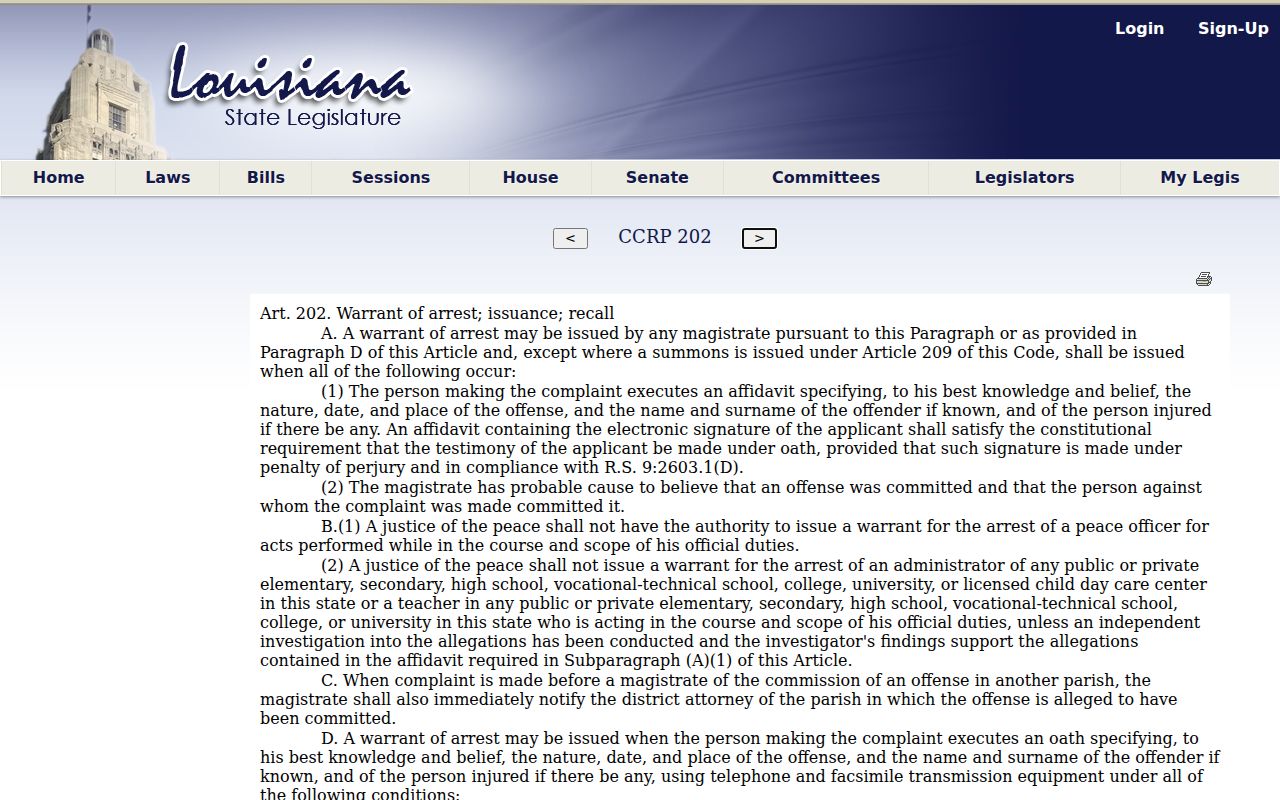
The affidavit is where a citizen or officer swears to the facts, and the magistrate's review of it opens the case. Not every issuance starts at the courthouse, since Louisiana also permits a telephone or facsimile procedure in defined circumstances. La. C.Cr.P. art. 202 governs all of it. That statute also lets the issuing magistrate recall the warrant later, with written notice to the district attorney and the executing agency.
A sealed filing stays closed even after an arrest.
Arrest Warrants: What They Contain
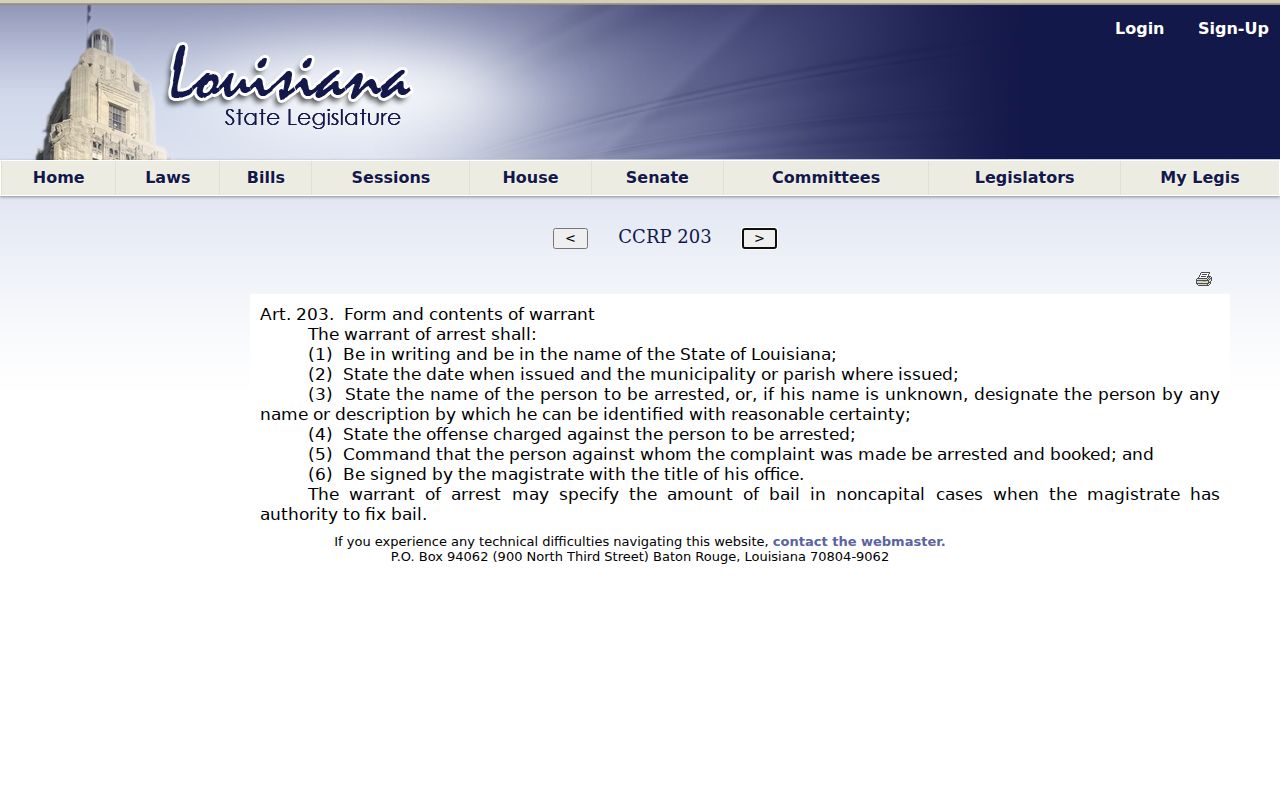
Louisiana prescribes the written form of an arrest warrant, and the field list below follows that statute. Union Parish publishes no sample warrant and no warrant-number pattern. The labels describe the document itself, not a screen you can search.
| Issuing magistrate | Title and signature of the officer who reviewed probable cause |
|---|---|
| Date and place | Where and when the warrant issued, tied to the parish or municipality |
| Person or description | A name or a description certain enough to identify the person |
| Offense | The charged offense the affidavit supports |
| Command | Direction to arrest the person and bring them to booking |
| Bail field | An amount a magistrate may set in a noncapital case |
The field list appears at La. C.Cr.P. art. 203. The case file carries the Docket No. that ties a Union Parish warrant to a court record.
A court docket shows how the case moved after issuance. That is where a reader learns whether Union Parish process still stands.
Who Serves an Arrest Warrant in Union Parish
Issuing and serving are different jobs, and several offices share the work. Sheriff's deputies are the parish-level agency in Union Parish. A city marshal has service powers tied to city-court process, and municipal police in Farmerville, Bernice, Marion, Junction City, and Spearsville handle local enforcement. Constables appear in the state directory alongside justices of the peace, which also notes which justices are certified to issue arrest warrants. No Union Parish agency posts a warrant-unit roster or a warrant phone extension, so the safe first call is the sheriff's main line at (318) 368-3124. Note: Court Support deputies handle courthouse security and bailiff duties, not warrant service.
How Warrants Get Served in Union Parish
Louisiana directs an arrest warrant to all peace officers in the state. An authorized officer may execute it in the parish where the person is found. That is why a Union Parish case can surface far from Farmerville. Moving to another town resolves nothing. Service can lead to booking at the Union Parish Detention Center, which gives charges and bond information. Bonding on a Third District charge happens at the sheriff's office, with a $30 fee per charge, cash or money order only.
Union Parish Warrants and the Federal Court in Monroe
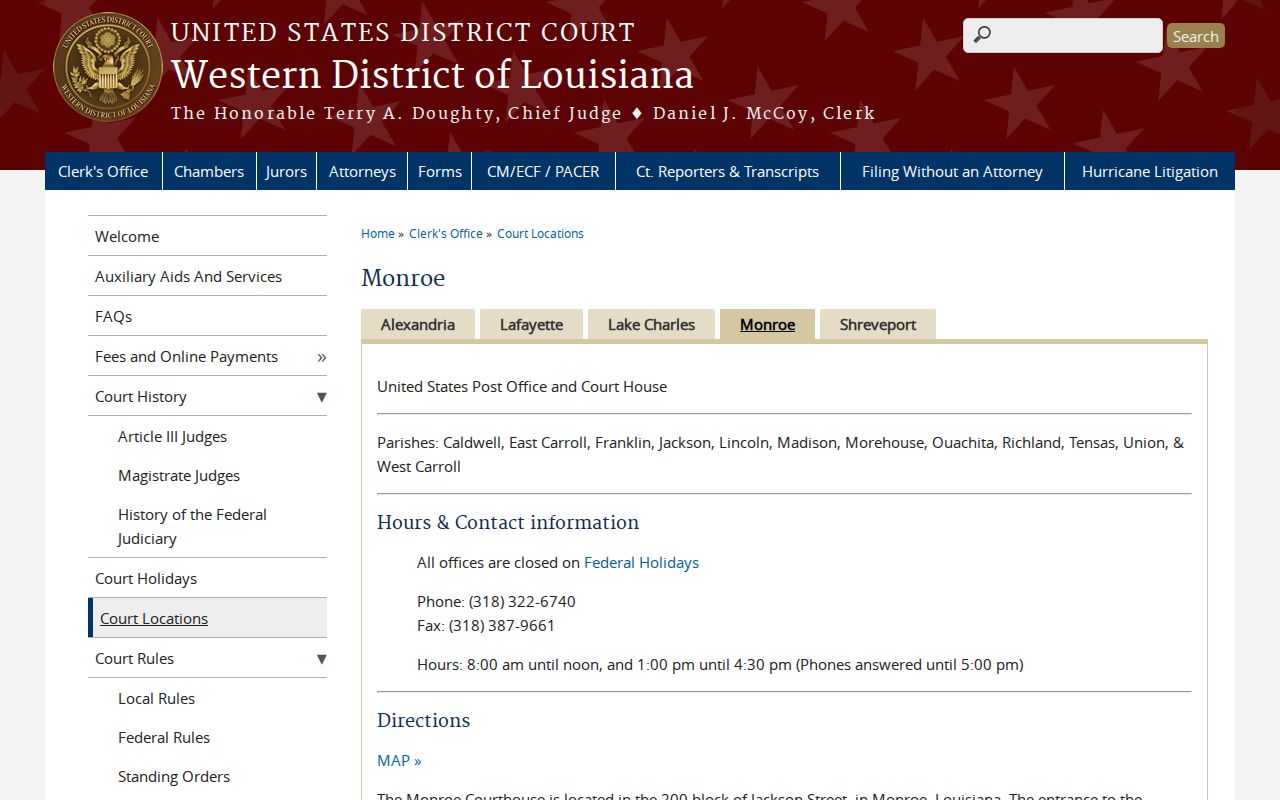
Federal process is a separate system with separate records. Union Parish sits in the Monroe Division of the U.S. District Court for the Western District of Louisiana, where a federal magistrate issues arrest warrants on a complaint or after an indictment. The Monroe Division page gives the court's address and hours. Federal dockets run through the court's electronic filing system, not a public warrant roster.
Federal fugitive matters out of Union Parish go to the U.S. Marshals task force for the Western District, based in Monroe.
Arrest Warrants, Summonses, and Bench Warrants
Three instruments can bring a person before a Louisiana court. The difference decides what happens at a Union Parish door.
| Instrument | Trigger | What It Authorizes |
|---|---|---|
| Arrest warrant | Probable cause of an offense | Arrest and booking by a peace officer |
| Summons | A charge or court order that calls for an appearance | Appearance on a set date without immediate custody |
| Bench warrant | A missed date or ignored obligation in an open case | Arrest to bring the person back before the judge |
Louisiana law allows a summons instead of an arrest in some misdemeanor and traffic encounters. Whether that rule applies to Union Parish turns on which jurisdiction issued the process.
The Recall Notice Chain After a Union Parish Arrest Warrant
A warrant does not vanish when a case is resolved. Its status changes only when the issuing magistrate recalls it, with written notice to the district attorney and the executing agency. After any court action, ask what the record says now and whether the agency was told. Union Parish publishes no recall form, so the filing usually runs through an attorney. The Clerk's office can tell you whether the minute entry shows a recall, a new setting, or a different order. Note: A bond or a new court date can change custody without changing the warrant status, so ask the court to read the entry rather than assume.
Out-of-Parish Warrants and Union Parish Courts
A warrant can follow you across parish lines. One issued elsewhere in Louisiana still belongs to the court that signed it, even if deputies find you in Union Parish. Out-of-state papers add another layer. The holding agency and the U.S. Marshals Service may get involved, and extradition is decided by the jurisdiction where the warrant began.
- Ask the holding agency which court issued the process and where it sits
- Ask whether the matter is state, federal, or another state's case
- Contact the originating court or a lawyer before agreeing to anything
Handling an Arrest Warrant in Your Name
Seeing your own name on a warrant is scary. Take it step by step. Confirm the active warrant with the issuing court, bring in a lawyer, and choose a path you can prepare for. Union Parish publishes no general walk-in procedure.
- Confirm the warrant and the issuing court with the Clerk or the court itself.
- Consult a Louisiana attorney about a recall motion, a summons, or a scheduled surrender.
- If custody happens, call the detention center for charges and bond, then follow the sheriff's bonding instructions.
- Get the outcome in writing and confirm the executing agency was notified.
Important: Talk to a lawyer before turning yourself in. An attorney can confirm the warrant, ask about a recall or a summons, and arrange a surrender so the terms are known in advance.
The handling steps on the county home page lay out that same sequence, with Union Parish contacts gathered in one spot.